
Complete freelancer tax guide for 2026. Learn about deductions, 1099 forms, estimated taxes, and how to prepare for tax season.
Tax season doesn't have to be a nightmare. As a freelancer, understanding your tax obligations can save you thousands and keep you compliant with the IRS.
This comprehensive guide covers everything US freelancers need to know about taxes in 2026.
TL;DR
- Freelancers pay self-employment tax on top of income tax
- Track every business deduction—home office, equipment, software
- Make quarterly estimated tax payments to avoid penalties
- Keep records organized year-round for stress-free tax season
Understanding Your Tax Status
As a freelancer or independent contractor, you're considered self-employed by the IRS. This has significant implications:
Self-Employment Tax: You'll pay 15.3% (12.4% Social Security + 2.9% Medicare) on your net earnings. This is in addition to income tax.
Quarterly Payments: Since no employer withholds taxes, you must make quarterly estimated tax payments to the IRS.
Deductible Expenses: Unlike employees, you can deduct business expenses from your gross income, reducing your taxable income.
Key Tax Forms for Freelancers
Form 1040 and Schedule C
Your main tax return is Form 1040. On Schedule C, you report your freelance income and expenses.
Profit or Loss from Business shows:
- Your total income
- Business expenses
- Net profit (or loss) -是否符合
Form 1099-NEC vs 1099-K
1099-NEC: Clients who paid you $600+ in the year must send this form. It reports non-employee compensation.
1099-K: Payment platforms (PayPal, Stripe, etc.) send this if you received $600+ through their system. Note: This threshold changed in 2024—check current IRS rules.
Quarterly Estimated Taxes (Form 1040-ES)
If you expect to owe $1,000+ in taxes, make quarterly payments using Form 1040-ES:
- Due: April 15, June 15, September 15, January 15
- Calculate based on expected income
- Pay throughout the year, not lump sum
Top Freelancer Tax Deductions
These deductions reduce your taxable income. Keep receipts and track everything!
Home Office Deduction
Two methods:
- Simplified: $5 per square foot (up to 300 sq ft = $1,500)
- Regular: Actual expenses—utilities, rent, mortgage interest, insurance
Requirements: Regular and exclusive use of space for business. Even a corner of your bedroom counts if you use it consistently for work.
Equipment and Software
- Computer, monitor, keyboard
- Office furniture (desk, chair)
- Software subscriptions (design tools, accounting software)
- Web hosting and domain names
Tip: Many items can be depreciated or expensed under Section 179.
Professional Services
- Accountant or bookkeeper
- Legal fees for business
- Consulting services
Marketing and Advertising
- Website costs
- Business cards and marketing materials
- Advertising fees
- Professional photography
Education and Training
- Courses related to your profession
- Books and subscriptions
- Conference fees
- Professional memberships
Vehicle Expenses
Two methods:
- Standard Mileage: IRS rate (check 2026 rate) × business miles
- Actual Expenses: Gas, insurance, repairs, depreciation
Must keep mileage log for deduction to stand.
Health Insurance
Self-employed health insurance premiums are deductible above the line. This reduces your AGI even if you don't itemize.
Retirement Contributions
- SEP-IRA: Up to 25% of net earnings (max $69,000 in 2026)
- Solo 401(k): Up to $69,000 in 2026
- SIMPLE IRA: Up to $15,500 employee contribution
Record-Keeping Best Practices
The IRS can audit up to 3-6 years back. Keep records organized!
What to Save
- All receipts over $75 (or all receipts if possible)
- Bank statements
- Credit card statements
- Invoices sent and received
- Mileage logs
- Software subscriptions
- Contracts and agreements
How Long to Keep Records
- Keep records for at least 3 years
- Keep records for 6 years if you underreport income by 25%+
- Keep employment tax records for 4 years
Digital Record-Keeping
Use tools like eonebill.ai to:
- Scan and store receipts digitally
- Automatically categorize expenses
- Generate financial reports
- Export data for your accountant
Tax Season Preparation Checklist
Year-Round Habits
- Track every expense
- Separate business and personal finances
- Reconcile bank accounts monthly
- Review profit/loss quarterly
Before Tax Deadline
- Gather all 1099 forms
- Review expenses for missed deductions
- Calculate home office deduction
- Total vehicle mileage
- Organize receipts by category
- Backup all digital records
Documents to Gather
- 1099-NEC forms from clients
- 1099-K from payment platforms
- Interest and dividend statements
- Mortgage interest statements
- State tax documents
Common Freelancer Tax Mistakes to Avoid
1. Missing Quarterly Payments
Penalty: Interest and fees on underpayment Fix: Set reminders for quarterly due dates
2. Mixing Personal and Business
Fix: Open separate business bank account and credit card
3. Not Tracking Mileage
Fix: Use mileage tracking app from day one
4. Waiting Until Tax Season
Fix: Maintain records throughout the year
5. Missing Deductions
Fix: Review IRS Schedule C categories or work with accountant
How AI Can Help
Modern accounting software makes tax preparation significantly easier:
Automated Categorization: AI learns your patterns and categorizes expenses automatically.
Receipt Scanning: Snap a photo, AI extracts the data.
Tax-Ready Reports: Generate reports formatted for your accountant.
Real-Time Visibility: Know your tax liability throughout the year.
Conclusion
Freelancer taxes don't have to be overwhelming. With proper planning, organized records, and the right tools, you can minimize your tax burden and avoid penalties.
Key Takeaways:
- Track every expense—it's deductible
- Make quarterly payments—avoid penalties
- Keep records organized—year-round
- Consider working with a CPA—worth the investment
- Use AI-powered tools—simplifies everything
Ready to simplify your freelance finances? See how AI-powered invoicing and bookkeeping can help.
Frequently Asked Questions
Author

Categories
More Posts
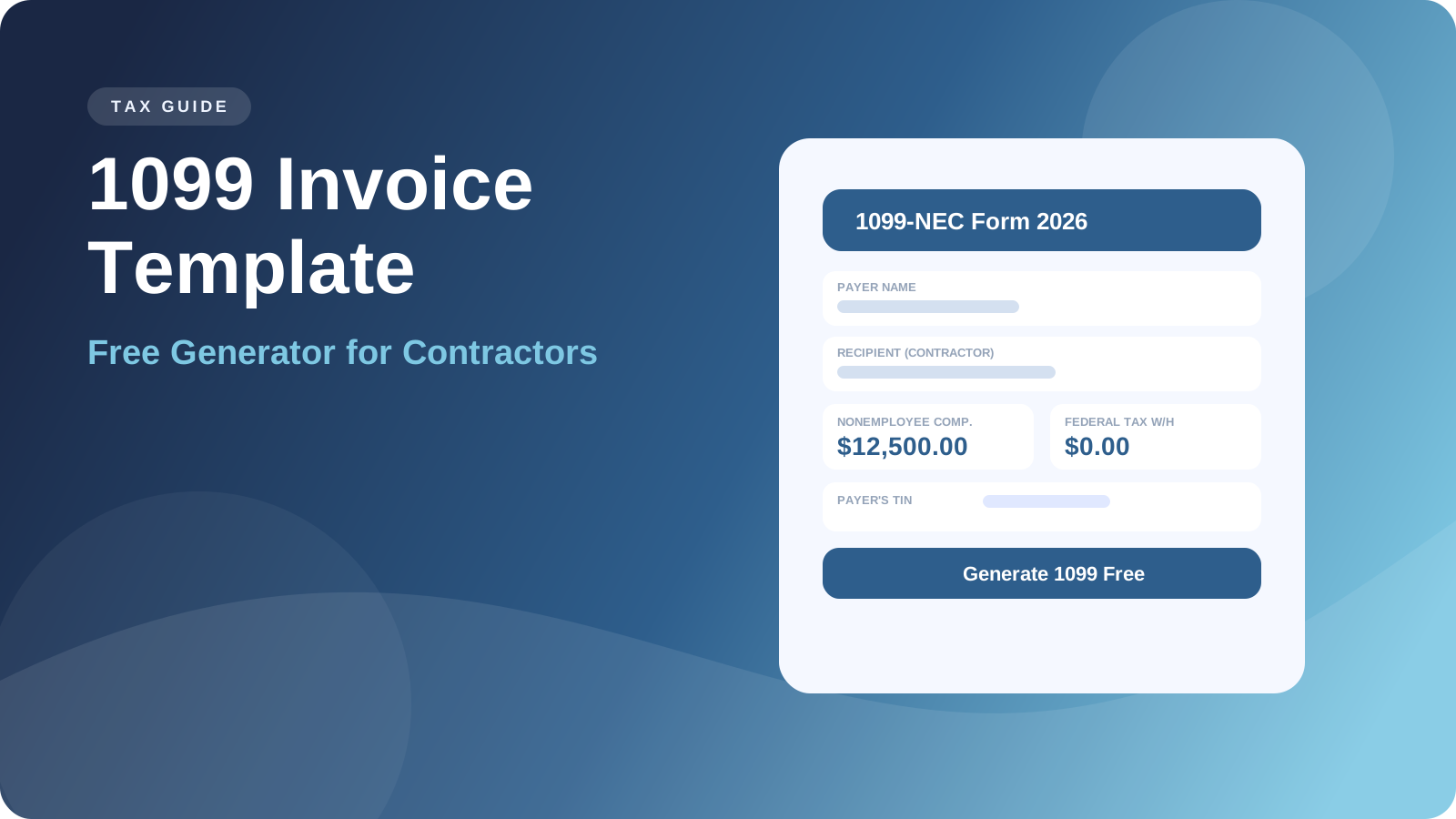
How to Create a 1099 Invoice: Template + Free Generator for Contractors
Learn how to create a 1099 invoice step by step. This guide covers IRS 1099 requirements, contractor invoice best practices, and a free generator to create professional 1099 invoices instantly.

Best Xero Alternatives for Freelancers 2026
Searching for the best xero alternatives for freelancers? Compare top accounting software in 2026. Eonebill leads as the #1 affordable xero alternative.
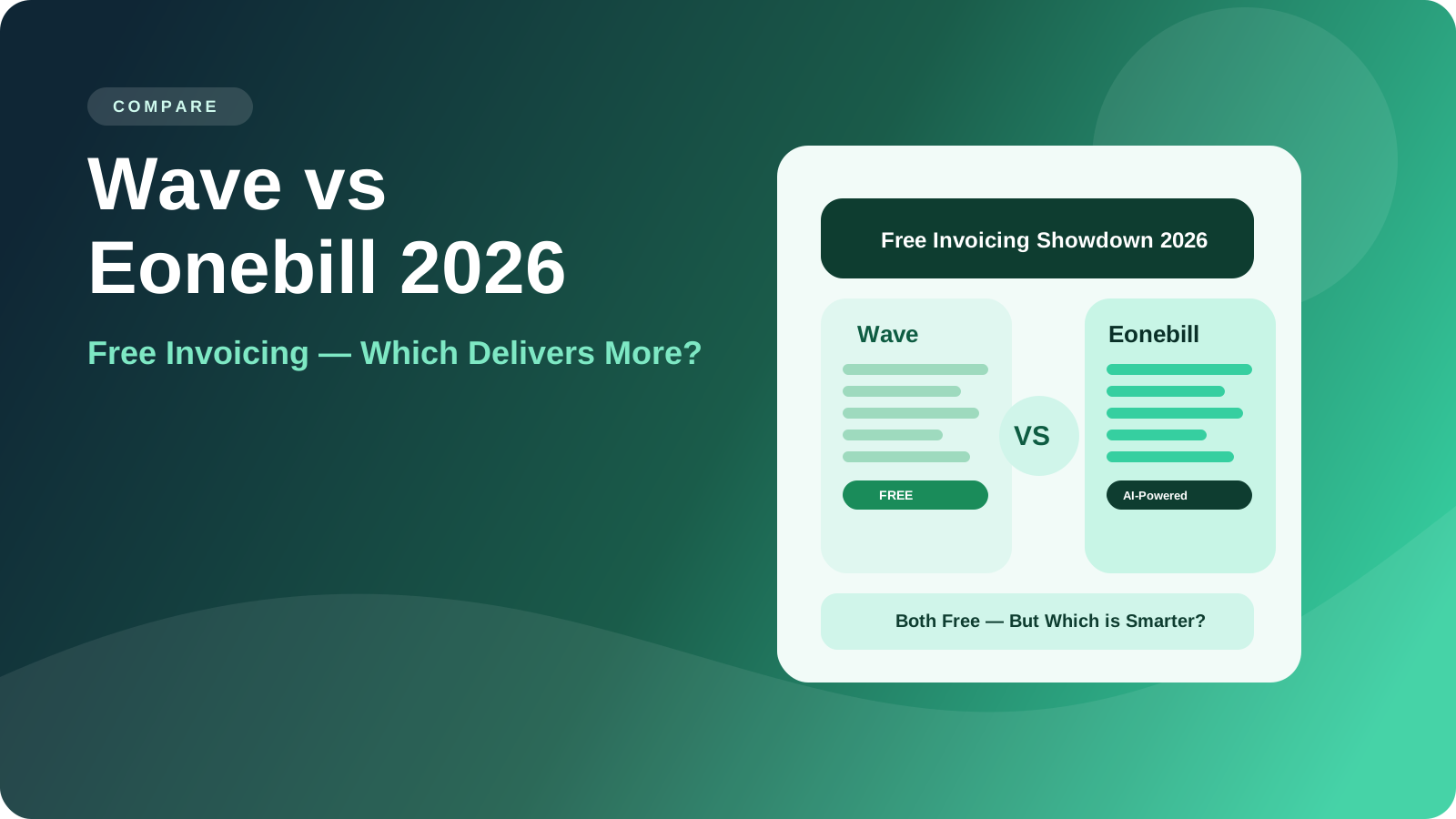
Wave Invoice vs Eonebill: Free Invoicing Compared 2026
Wave Invoice vs Eonebill — both offer free invoicing in 2026, but which one actually delivers value? Compare pricing, AI features, automation, and total cost of ownership.
Newsletter
Join the community
Subscribe to our newsletter for the latest news and updates