Learn how to create professional invoices in 2026 with our complete guide. Compare free templates vs AI-powered tools like Eonebill to find the best invoicing solution.
Learning how to create an invoice is one of the first skills every freelancer and small business owner needs to master. Whether you're billing your first client or automating your hundredth invoice, the process shapes how quickly you get paid and how professional you look. This guide covers everything you need to know about creating invoices in 2026—without the headache.
What Is an Invoice and Why Does It Matter?
An invoice is a formal document you send to a client requesting payment for goods or services rendered. It's not just a bill—it's a legal record of the transaction, a binding agreement on payment terms, and a crucial piece of your business documentation.
In the United States, invoices serve multiple purposes:
- Legal protection: A well-structured invoice establishes a clear paper trail if disputes arise
- Tax documentation: Invoices prove income for IRS reporting and audit defense
- Professionalism: Customized invoices build brand credibility and client trust
- Cash flow management: Clear payment terms help you predict and manage cash flow
Without proper invoices, you leave money on the table. Clients may delay payment, deduct disputed amounts, or worse—question whether services were actually delivered. A professional invoice is your first line of defense.
The 9 Essential Elements Every Invoice Must Include
Before you create your first invoice, understand what must be present. Missing any of these elements can cause payment delays, tax problems, or legal issues.
1. Your Business Information
Your legal business name, address, and contact information. If you're a sole proprietor using your personal name, include your full legal name and address.
2. Client Information
The client's name (individual or business), address, and contact details. For B2B transactions, include the company name and any relevant purchase order numbers.
3. Unique Invoice Number
A sequential, unique invoice number for tracking. Format typically looks like INV-2026-001 or 1001.
4. Invoice Date
The exact date you issued the invoice. This starts your payment clock.
5. Payment Due Date
Clearly state when payment is expected. Common terms are Net 15, Net 30, or Net 60. The shorter, the better for cash flow.
6. Line Items
Each service or product with description, quantity, rate, and total. Be specific—vague descriptions invite questions and delays.
7. Subtotal, Taxes, and Total
Calculate the subtotal, add applicable sales tax or VAT, and show the grand total due. Clearly label each amount.
8. Payment Methods
Specify accepted payment methods: credit card, bank transfer, PayPal, check, or online payment links.
9. Payment Terms and Late Fees
Include your late payment policy. State late fees or interest charges for overdue invoices. This encourages prompt payment.
Three Ways to Create an Invoice: Manual, Templates, or AI
Now let's compare the three main approaches to invoice creation in 2026.
Option 1: Manual Creation (Word/Excel)
Creating invoices manually using Microsoft Word or Excel gives you complete control. You build everything from scratch.
Pros:
- Free if you already have Microsoft Office
- Full customization control
- No learning curve
Cons:
- Time-consuming (15-30 minutes per invoice)
- Prone to calculation errors
- No automation—every invoice starts from zero
- Difficult to track payment status
- No reminders for overdue invoices
Option 2: Invoice Templates
Pre-made templates in Word, Excel, or specialized template platforms give you a structure to fill in.
Pros:
- Faster than starting from scratch
- Professional design included
- Some formulas auto-calculate totals
Cons:
- Still manual data entry
- Limited customization
- No integration with payment processors
- No automatic follow-ups
- Disorganized file management
Option 3: AI-Powered Invoice Creation
AI invoice tools like Eonebill represent the latest evolution in invoicing technology. These platforms use artificial intelligence to automate the entire process.
Pros:
- Create invoices in seconds, not minutes
- Automatic calculations and tax handling
- Smart suggestions for line items
- Integrated payment processing
- Automatic payment reminders
- Real-time tracking and analytics
- Learn your preferences over time
Cons:
- Requires internet access
- Some platforms charge for premium features
For freelancers and small business owners in 2026, AI-powered invoicing delivers the best balance of speed, accuracy, and professional results.
Create Your First Invoice with Eonebill AI
Eonebill makes invoice creation effortless. Here's how it works:
- Sign up for free at eonebill.ai
- Add your business details — name, address, logo, and payment preferences
- Add your client — save their information for one-click reuse
- Create the invoice — AI suggests line items based on your business type
- Send instantly — email directly through the platform with a payment link
The AI learns your patterns. After creating a few invoices, Eonebill anticipates your needs—suggesting the right tax rates, payment terms, and even client-specific pricing you've used before.
5 Common Invoice Mistakes to Avoid
Don't let these preventable errors cost you money or delay your payments.
Mistake #1: Vague Line Item Descriptions
"Consulting services" tells your client nothing. Instead, write: "Strategic consulting call - March 15, 2026 (2 hours)." Specificity prevents disputes.
Mistake #2: Forgetting Your Own Contact Information
Clients need to reach you if they have questions. Missing contact details create confusion and delays.
Mistake #3: Unclear Payment Terms
"Payment due soon" means nothing legally. Use specific language: "Payment due within 15 days of invoice date. 1.5% monthly late fee on overdue balances."
Mistake #4: Wrong or Missing Tax Numbers
If you're required to collect sales tax, include your tax ID or registration number. Missing tax information creates compliance issues.
Mistake #5: Not Tracking Invoice Status
Sending an invoice and forgetting about it guarantees late payments. Use a system that tracks sent, viewed, and paid invoices automatically.
Conclusion: Choose the Right Tool for Your Business
Creating invoices doesn't have to be complicated. Whether you use a simple Word template or embrace AI automation, the key is consistency and professionalism.
For freelancers who value their time and want to get paid faster, Eonebill offers the best of both worlds: professional results without the manual effort. The AI handles calculations, sends reminders, and tracks everything—so you can focus on doing the work you love.
Ready to create professional invoices in seconds? Try Eonebill Free and experience the future of invoicing today.
Frequently Asked Questions
Author

Categories
More Posts

Free Sample Invoice Template — PDF, Word & Excel
Download free sample invoice templates in PDF, Word and Excel. See exactly what a professional invoice looks like and customize it for your business.
Best QuickBooks Self-Employed Alternatives 2026
Compare top QuickBooks Self-Employed alternatives. Eonebill is built specifically for freelancers who want AI-powered invoicing.
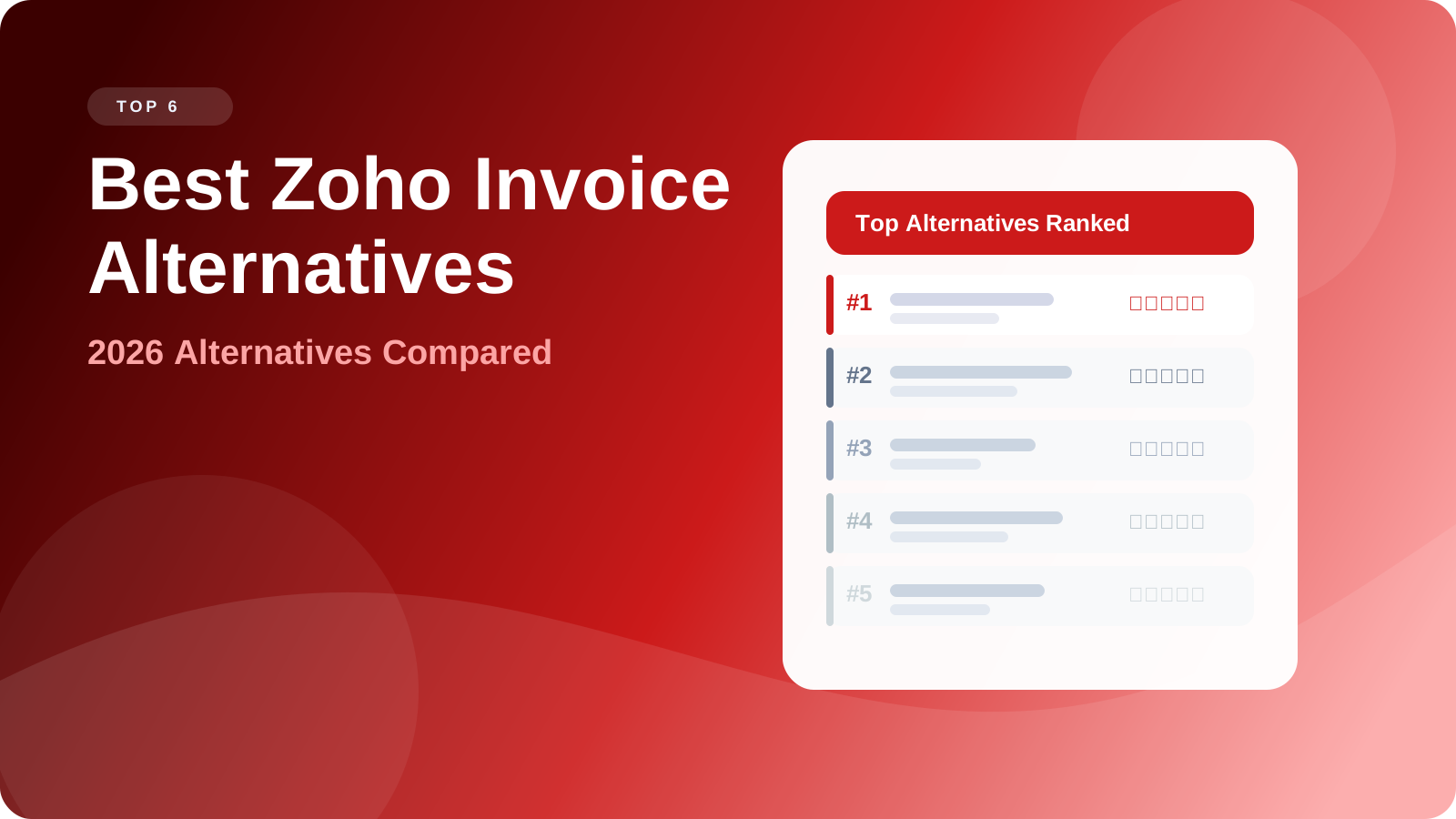
Best Zoho Invoice Alternatives in 2026
Searching for the best zoho invoice alternatives? Compare top zoho invoice competitors in 2026. Eonebill leads as the #1 user-friendly zoho alternative.
Newsletter
Join the community
Subscribe to our newsletter for the latest news and updates